Between 2003 and 2024, Google released dozens of major algorithm updates. Each had a different name, a different target, and a different set of casualties. Florida wiped out affiliate sites. Panda destroyed content farms. Penguin demolished link schemes. Helpful Content penalized entire domains. The SEO industry treated each as a separate crisis, requiring separate responses.
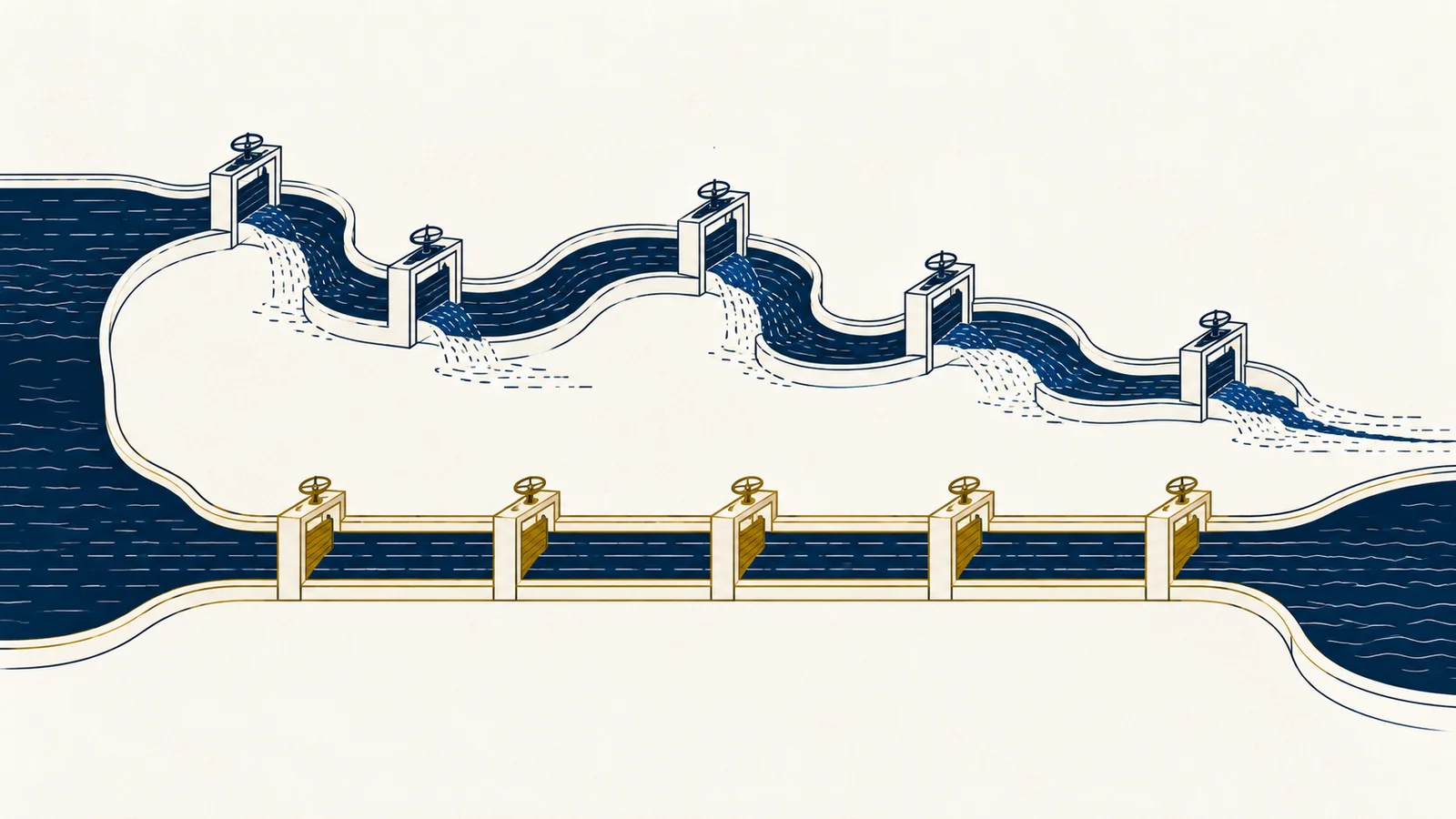
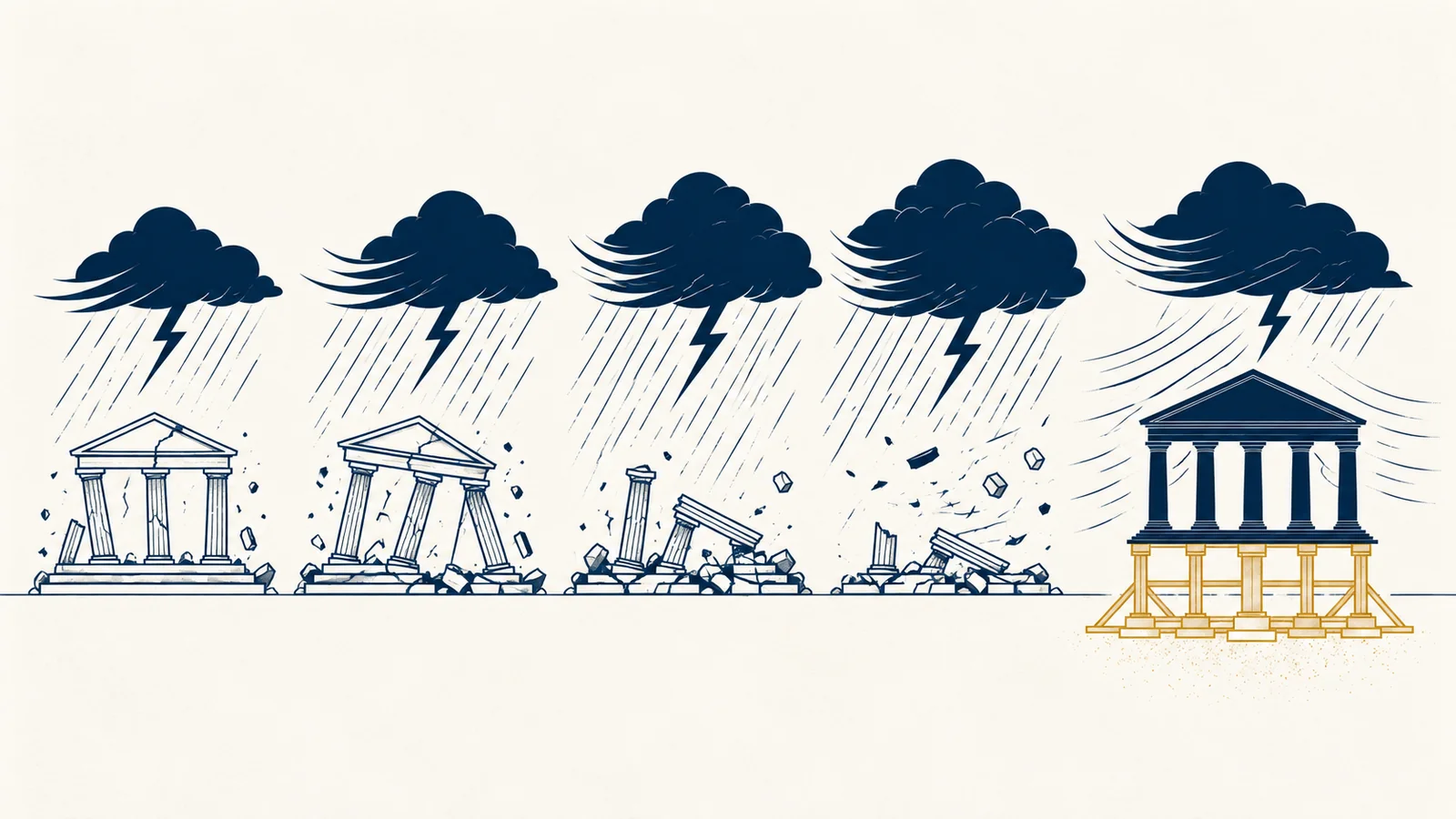
They were not separate. They were the same crisis, repeated. Every major Google update targeted a different method of simulating authority without building it. The sites that survived every update were the ones that never simulated anything: they built real authority infrastructure and maintained it.
The pattern across twenty years is consistent: what is not structurally real eventually gets removed from rankings. The only question is which form of simulation Google targets next.
This is the history of Google’s algorithm updates read through the lens of authority management, not as a list of dates and names, but as a single, accelerating trend toward requiring genuine authority from every site that wants to be visible.
Era 1: The wild west collapses (2003 to 2010)
2003 Florida
Released during the holiday season of November 2003, Florida changed how Google evaluated backlinks. Sites that had built rankings on manipulative link signals (keyword-stuffed anchor text, link farms, reciprocal link networks) lost their positions overnight. Retail and affiliate sites were devastated. Some went out of business within weeks.
Authority lesson: Fake link signals will eventually be detected and devalued. Google promised not to release major updates before the holidays again, and kept that promise until 2011.
2010 Caffeine
Caffeine was not a penalty. It was an infrastructure rebuild: a complete overhaul of how Google crawled, indexed, and served results. The index became faster, larger, and more responsive to fresh content. Sites that published frequently saw faster indexation. Sites that stagnated saw their cached results become stale more quickly.
Authority lesson: The foundation was being rebuilt for what came next. Caffeine gave Google the infrastructure to evaluate quality at scale, and Panda was eight months away.
Era 2: Content and links get audited (2011 to 2014)
Between 2011 and 2014, Google systematically dismantled the two pillars of manipulation that had sustained low-quality sites for years: fake content and fake links. The industry would never recover its previous form.
2011 Panda
Launched February 23, 2011. Panda targeted thin content, duplicate content, and content farms: sites that produced volume without genuine value. It affected an estimated 12% of all English search queries on its first pass. Sites like eHow, Ezine Articles, and thousands of content mills saw traffic collapse. Panda was not a one-time penalty. It was refreshed repeatedly over the following years, each pass refining what “quality” meant.
Authority lesson: Content volume without depth is a form of simulated authority. Publishing 10,000 thin articles creates the appearance of topical coverage without the substance. Panda taught that what AMS calls Human Signal Density (genuine expertise, original data, real specificity) cannot be manufactured at scale.
2012 Penguin
Launched April 24, 2012. Penguin targeted manipulative link building: keyword-stuffed anchor text, Private Blog Networks (PBNs), paid links, link exchanges, and link schemes of every kind. The first pass affected 3.1% of English queries. Subsequent versions (culminating in Penguin 4.0 in 2016, which became part of Google’s core algorithm) expanded detection capabilities and shifted from penalizing entire sites to devaluing individual links.
Authority lesson: Manufactured Numerical Authority, inflating DR through spam links without genuine editorial endorsement, became a permanent liability rather than an asset. Every PBN link became a time bomb. This is why AMS treats the backlink audit and disavow process as the first step of authority management: you clean before you build.
2012 Knowledge Graph
Google launched the Knowledge Graph in May 2012: a structured database of entities (people, places, organizations, concepts) and their relationships. For the first time, Google was not just matching keywords to pages. It was understanding what things are and how they connect. The right side of search results began showing entity cards pulled from structured data, not from ranked pages.
Authority lesson: This was the beginning of entity-based search. The domains that would eventually dominate, in both traditional search and AI citation, were the ones that established themselves as recognizable entities with consistent signals across platforms. What AMS calls the Entity Stack and Cognitive Validation became structurally important from this point forward.
2013 Hummingbird
Hummingbird was a complete rewrite of Google’s core algorithm, the most significant since 2001. It shifted search from keyword matching to semantic understanding. Google began interpreting the meaning behind queries, not just the words. A search for “what’s the closest place to buy coffee” would now understand location, intent, and context, rather than looking for pages containing those exact words.
Authority lesson: Keyword stuffing became not just penalized but structurally obsolete. Authority shifted toward topical depth: sites that genuinely covered a subject with structured, semantically rich content. This is the foundation of the silo model: concentrated topical authority that signals expertise to an algorithm designed to understand meaning.
2014 Pigeon
Pigeon improved the connection between Google’s core algorithm and its local search results. Local businesses became more visible based on relevance, distance, and prominence. The update tied local ranking signals more closely to traditional web signals, meaning that a business’s website authority directly influenced its local search visibility.
Authority lesson: Local authority became inseparable from general domain authority. A Google Business Profile alone was no longer enough: the website behind it needed genuine authority signals.
Era 3: The machine learning shift (2015 to 2019)
Google stopped writing explicit rules for what qualified as quality and started training systems to learn quality from patterns. The implications were profound: you could no longer game a specific rule because there was no specific rule to game. The algorithm learned to recognize quality, and its opposite, from billions of examples.
2015 Mobilegeddon
On April 21, 2015, Google began using mobile-friendliness as a ranking signal. Sites that were not optimized for mobile devices were demoted in mobile search results. The name “Mobilegeddon” was coined by the industry; Google simply called it a “mobile-friendly update.”
Authority lesson: Technical infrastructure became a ranking factor. Authority without technical health (slow pages, broken mobile experiences, poor Core Web Vitals) would increasingly underperform. The infrastructure layer of authority management expanded from links and content to include performance and accessibility.
2015 RankBrain
RankBrain was Google’s first use of machine learning as a core ranking signal. It helped Google interpret queries it had never seen before, estimated at 15% of all daily queries, by understanding the intent behind unfamiliar combinations of words. Google confirmed RankBrain was the third most important ranking signal at the time of its introduction.
Authority lesson: The algorithm was no longer a set of rules that could be reverse-engineered. Machine learning meant that the system learned from patterns in aggregate, not from individual signals that practitioners could isolate and exploit. The only durable strategy became building the kind of site that the system would learn to recognize as authoritative.
2017 Fred
Never officially named by Google (the name “Fred” came from Gary Illyes joking that all updates should be called Fred), this update targeted low-value content sites that existed primarily to generate ad revenue. Thin content wrapped around aggressive ad placement was the profile most affected.
Authority lesson: Sites built to extract value (ad revenue) rather than provide value (genuine content) were structurally vulnerable. The distinction between a web property as an asset and a web property as an extraction mechanism became a ranking signal.
2018 Medic
The August 2018 core update was nicknamed “Medic” because it disproportionately affected health, medical, and financial websites: categories where inaccurate information can cause real harm. Google’s Quality Rater Guidelines introduced the concept of “Your Money or Your Life” (YMYL) pages, held to higher standards of expertise, authoritativeness, and trustworthiness.
Authority lesson: E-E-A-T (Experience, Expertise, Authoritativeness, Trustworthiness) became operationally critical. Sites in sensitive niches needed verifiable credentials, clear entity information, and trust signals that extended beyond the domain itself. This is exactly what the Entity Stack is designed to provide.
2019 BERT
BERT (Bidirectional Encoder Representations from Transformers) improved Google’s understanding of natural language, particularly the relationships between words in a query. It affected an estimated 10% of all search queries, with the biggest impact on longer, conversational queries where word order and context mattered.
Authority lesson: Content that answered real questions with genuine specificity, rather than targeting keyword variations, gained structural advantage. BERT was a precursor to the AI era: the same transformer architecture that powers BERT would eventually power ChatGPT, Claude, and the LLMs that now cite sources directly.
Era 4: The authority reckoning (2021 to 2024)
The final era, still ongoing, is the most consequential. Google stopped targeting specific tactics and started evaluating whether sites deserve their authority at all. The question shifted from “does this page follow the rules?” to “does this site genuinely help users?” The answer requires structural authority, not tactical compliance.
2021 Page Experience
Google introduced Core Web Vitals, namely Largest Contentful Paint (LCP), First Input Delay (FID) and Cumulative Layout Shift (CLS), as ranking signals. Page speed, interactivity, and visual stability became measurable components of ranking eligibility. Sites with poor technical performance were demoted regardless of content quality.
Authority lesson: Authority infrastructure now formally included technical performance. A domain with strong backlinks and excellent content but slow load times carried what AMS calls Structural Debt in a dimension most operators ignored.
2022 Helpful Content Update
Launched in August 2022 and refined through 2023, the Helpful Content Update introduced a site-wide signal that evaluated whether a domain’s content was primarily created for people or primarily created to attract search engine traffic. Sites with a significant proportion of “search-engine-first” content saw their entire domain demoted, not just individual pages. The update was devastating for sites that had scaled content production through templates, AI generation, or topic-keyword matching without genuine editorial value.
Authority lesson: This update operationalized The Meritocracy Myth in reverse. For years, low-quality content on high-authority domains could rank through inherited trust. The Helpful Content Update demonstrated that authority at the domain level does not protect individual content that lacks genuine value. Quality became a domain-level signal, not just a page-level one.
2023 Spam Updates
Throughout 2023, Google released multiple spam-focused updates targeting link spam, cloaking, hacked content, and auto-generated content at scale. The updates were quieter than Panda or Penguin but consistently tightened the gap between what Google’s algorithm could detect and what practitioners could get away with.
Authority lesson: The margin for manipulation narrowed further. Each spam update reduced the effectiveness of one more shortcut, making genuine authority infrastructure the only approach with a durable return on investment.
2024 Site Reputation Abuse
In 2024, Google explicitly targeted “parasite SEO”: the practice of publishing low-quality or third-party content on high-authority domains to exploit their trust signals. Major publications that had rented subdirectories to coupon sites, affiliate operations, or sponsored content networks saw those sections deindexed or demoted. The update closed one of the last remaining loopholes for borrowing authority rather than building it.
Authority lesson: Borrowed authority is not authority. A coupon site on a newspaper’s subdomain is not a newspaper. The trust signal belongs to the entity that earned it, and Google can now evaluate whether the content on a domain actually represents that entity’s expertise. This is the final vindication of what AMS has argued from the beginning: authority must be built, not rented.
The pattern
Read in sequence, twenty years of Google updates tell a single story with escalating consequences:
2003 to 2010: Google learned to detect fake link signals.
2011 to 2014: Google learned to detect fake content quality and fake backlink profiles.
2015 to 2019: Google learned to understand meaning, intent, and user experience, making rule-based manipulation obsolete.
2021 to 2024: Google learned to evaluate whether entire domains deserve their authority, punishing sites where the infrastructure does not match the signals.
Every update narrowed the gap between real authority and simulated authority. The sites that survived every era are the ones that never had a gap to close, because they built genuine authority infrastructure from the beginning.
This is not a historical observation. It is a prediction. The direction is clear and accelerating. AI-powered search, where LLMs evaluate sources for citation, applies the same logic with even less tolerance for simulation. A site that was “good enough” for Google in 2020 may be invisible to AI in 2026 if its authority infrastructure does not meet the higher standard of citability.
The operators who understand this build authority as infrastructure. The operators who do not understand it rebuild after every update.
Frequently Asked Questions
What do all Google algorithm updates have in common?
Every major Google algorithm update from 2003 to 2024 targeted a different method of simulating authority without actually building it. Florida targeted fake link signals. Panda targeted fake content quality. Penguin targeted manufactured backlinks. Helpful Content targeted content written for algorithms rather than people. The pattern is consistent: what is not structurally real eventually gets removed from rankings.
Which Google updates had the biggest impact on SEO?
The most impactful updates were Panda (February 2011), which eliminated thin content; Penguin (April 2012), which penalized manipulative links; Hummingbird (2013), which shifted search toward meaning; and the Helpful Content Update (2022), which penalized content created primarily for search engines. Each fundamentally changed what viable SEO strategy looked like.
Is SEO still worth it after so many Google updates?
Yes, but only if the approach is structural. Every update has punished shortcuts and rewarded genuine authority infrastructure: clean architecture, legitimate backlinks, consistent entity signals, and content that serves real needs. Sites built on fundamentals survive every update. Sites built on tactics rebuild after each one.
How do Google algorithm updates relate to authority management?
Authority management is the discipline of building the structural trust that algorithms reward and protecting it from the decay that algorithms penalize. Every major update has narrowed the gap between real authority and simulated authority. The AMS framework treats this as its central premise: authority built on infrastructure survives; authority built on tactics does not.
What is the Site Reputation Abuse update?
The Site Reputation Abuse update (2024) targeted parasite SEO: publishing low-quality content on high-authority domains to exploit host trust signals. It closed one of the last loopholes for borrowing authority, reinforcing that authority must be earned at the content level, not just inherited from the domain.